Complex client requirements? Automate them instead of paying for them
Clients often come with complex packaging, shipping, and labeling requirements. Manual internal coordination makes that expensive very quickly. ParcelPilot helps you fulfill those requirements economically and without avoidable errors.
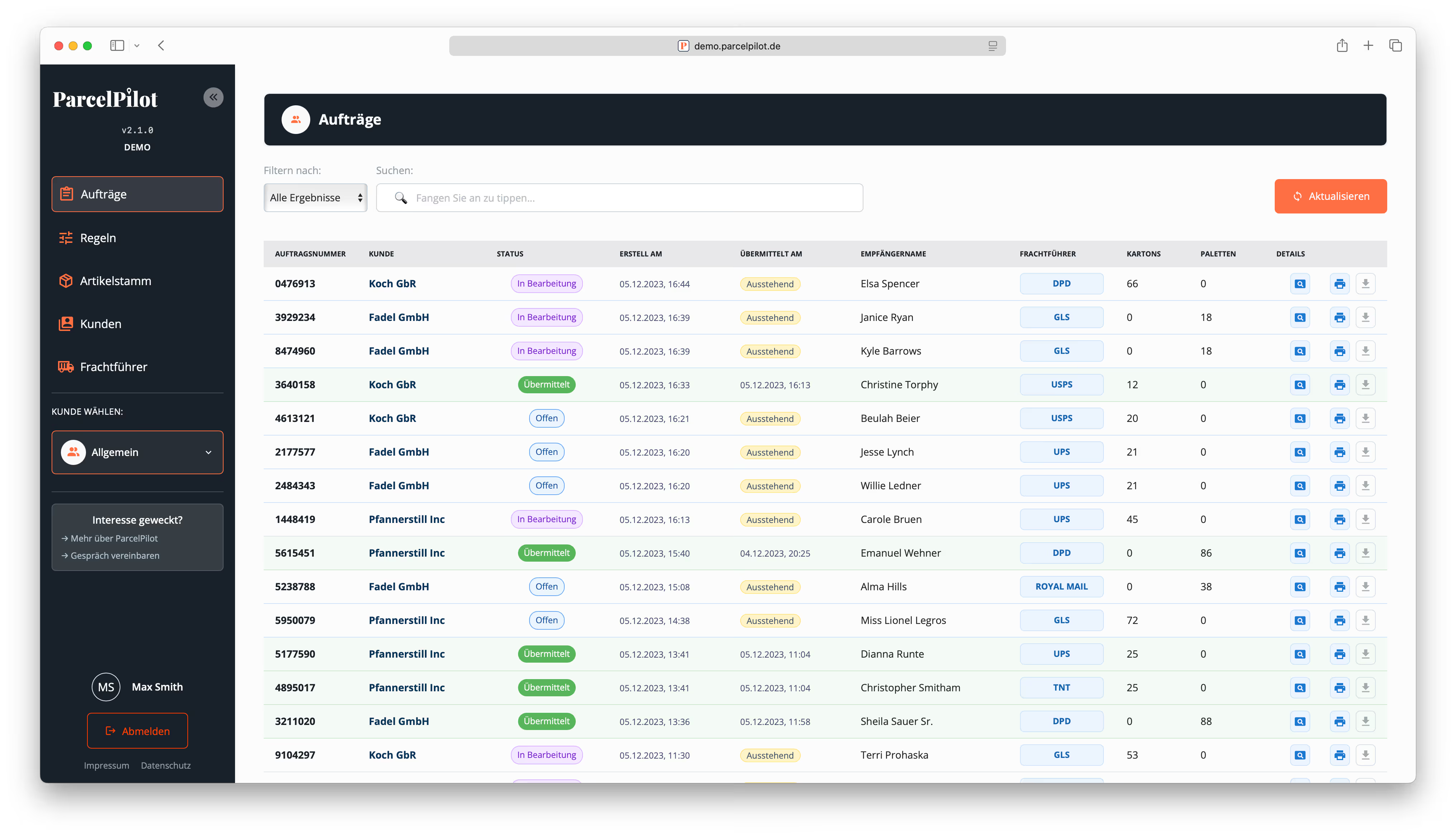
ParcelPilot in detail
ParcelPilot coordinates your existing systems and automates client-specific workflows. Each tenant gets its own rules without forcing changes to your ERP.
Rules belong in the system, not in people's heads
Every client means your team needs to know which rules apply to each individual order. Where is that written down? In the contract? In last year's email? That might work for three clients. But what happens at ten? Or twenty? Errors increase, workflows slow down, and costs rise. ParcelPilot automates the application of those rules: once set up properly, an exception becomes an adaptable standard. Each client can have their own workflows and requirements, and for you everything stays predictable, consistent, and economical.
- Freight-cost optimization through automatic carrier selection
- Combined rule chains without manual intervention
- Central rule management instead of tribal knowledge
Flexible like your operation
How it works:
Data intake
Rule processing
Order execution
Continuous Development
With ParcelPilot automation, you can unlock new business opportunities: offer additional services for customers, handle more complex orders profitably, or expand into new markets. At the same time, the system stays flexible - rule values can be adjusted quickly when contracts or workflows change, without much development effort. The system grows with your business.
Do you see potential for your business?
Let us discuss how ParcelPilot fits into your existing infrastructure and which automations would have the biggest impact in your operation.